
Strolling through Zurich's Old Town
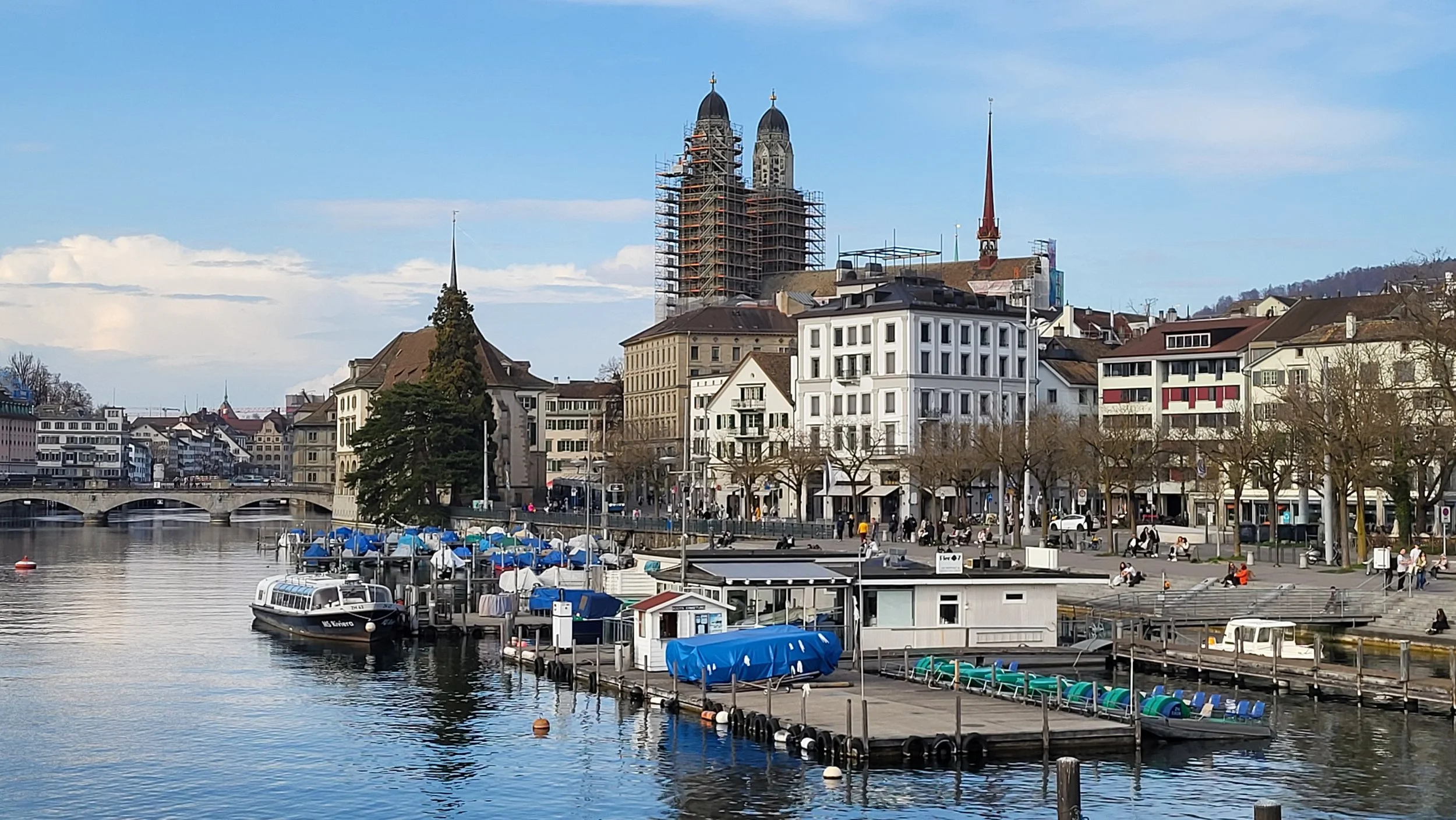
The twin towers of Zurich’s iconic landmark, the Grossmünster, are scaffolded for extensive renovation work.
Zurich’s Old Town is a huge construction site
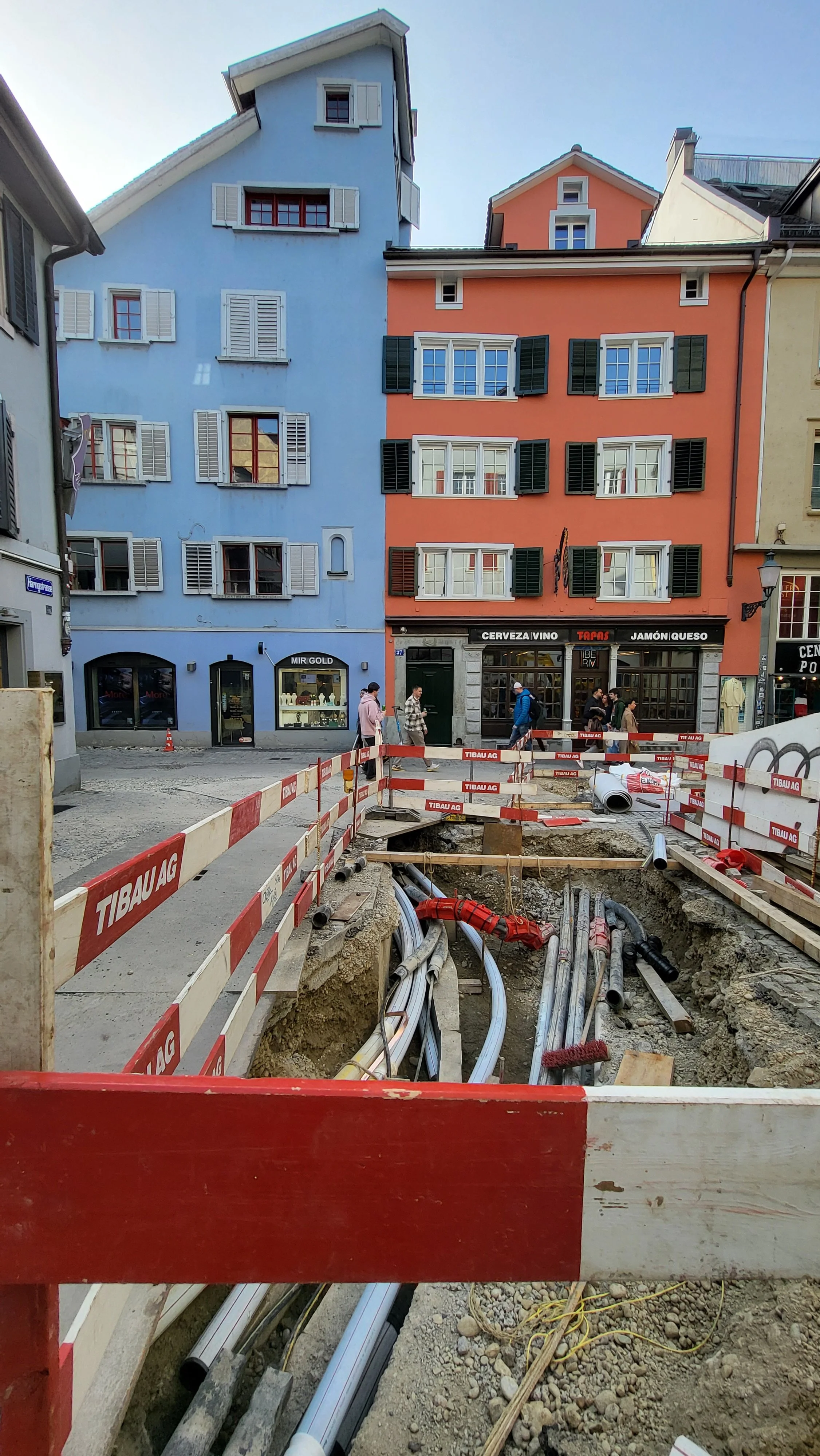
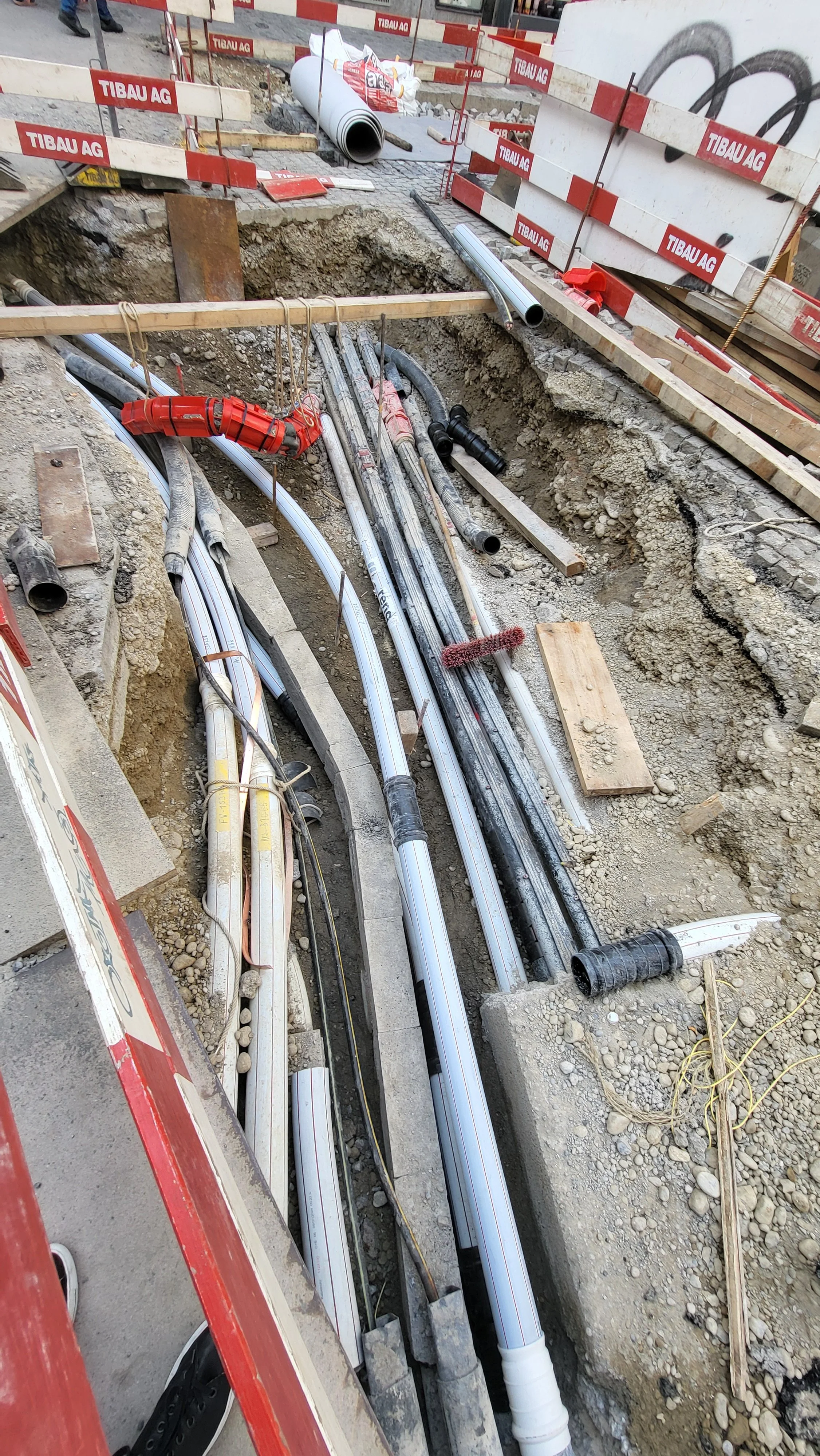
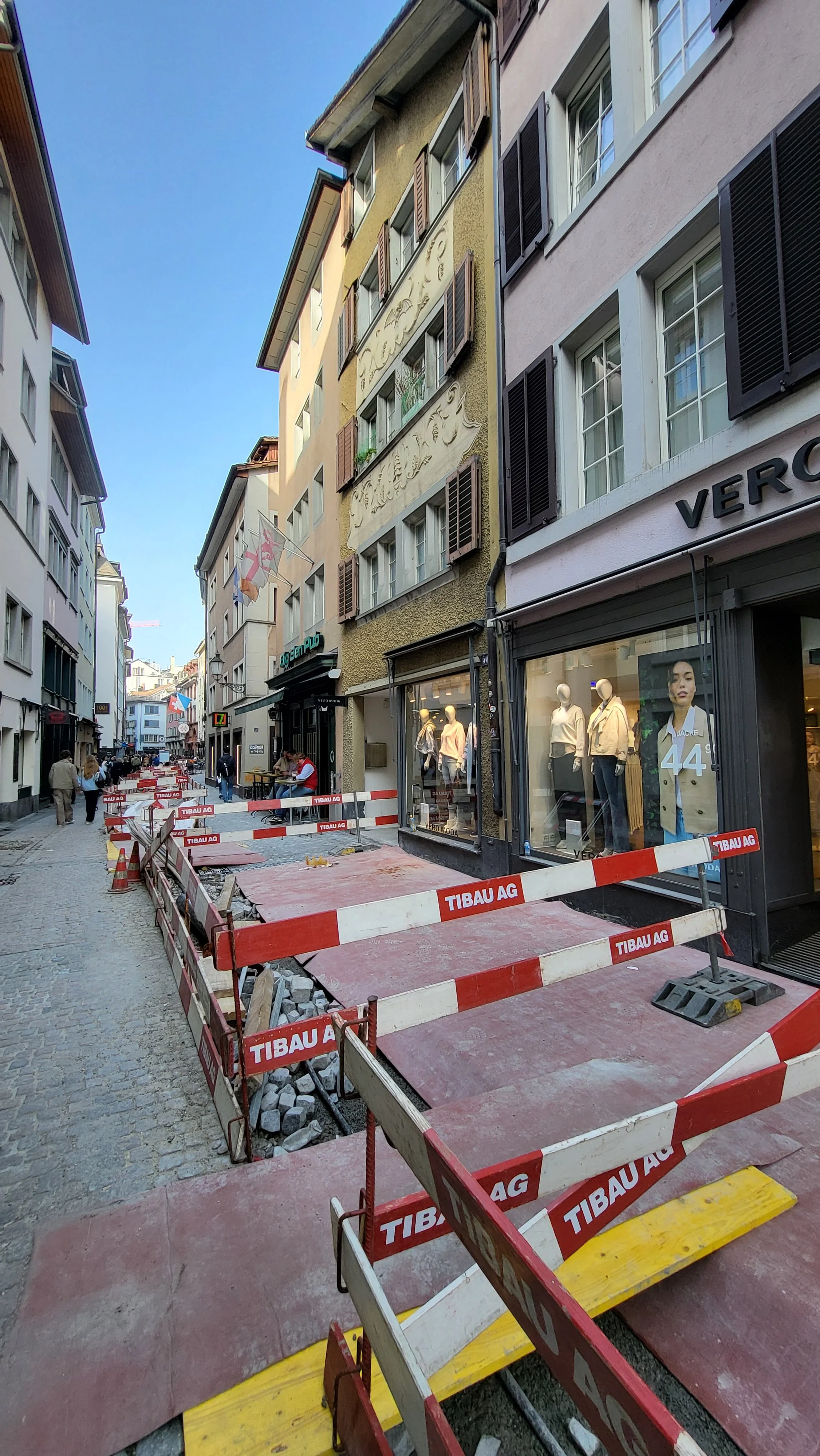
When I returned last year from the megacity of Mumbai - a real challenge for pedestrians in many ways - I thought I could relax in my peaceful hometown of Zurich, Switzerland. But what a shock when I took my usual walk from home to the nearby Niederdorf, a central part of Zurich's Old Town on the right bank of the Limmat River! The quaint alleyways that tourists and I love so much were torn up, excavators were everywhere, and many areas were cordoned off. I learned that the old water, gas, and electricity lines were being replaced, and the cobblestones were being repaired in stages until the end of 2027.
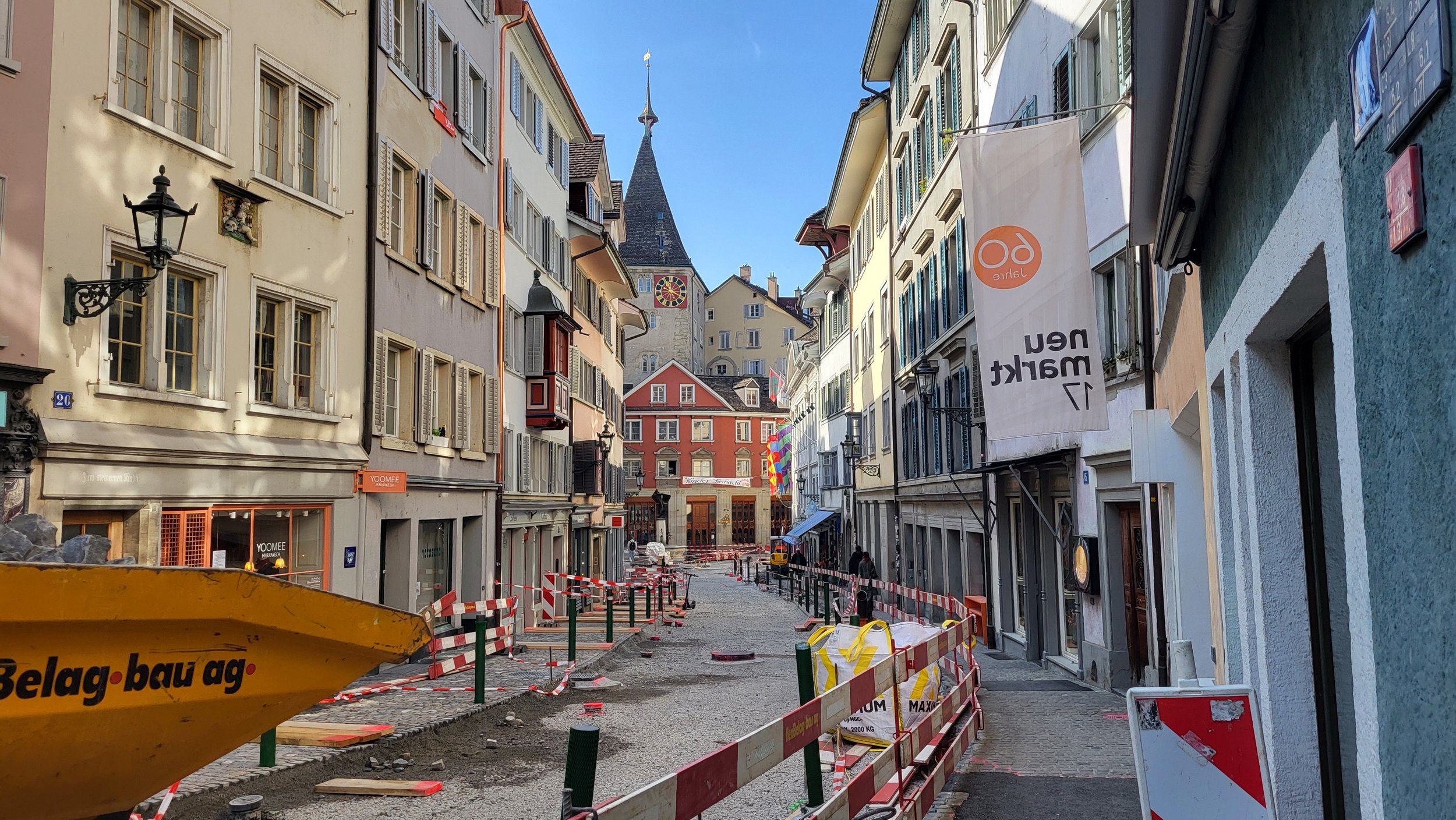
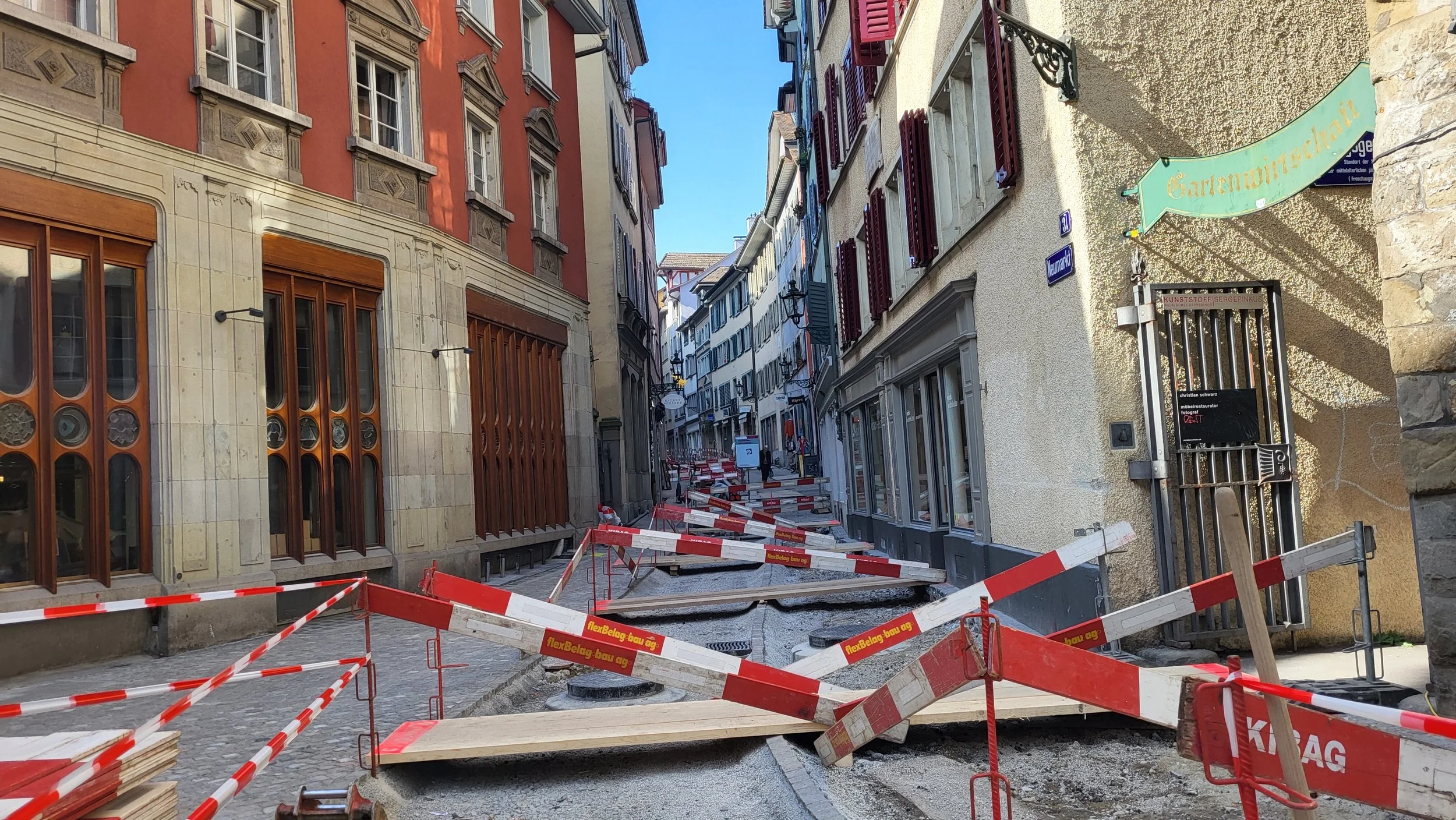
Usually, I enter the Old Town via Neumarkt, which, as you can see in the photos, is now - like the entire Niederdorf - one huge construction site.
So don’t stroll carelessly through this part of the old town while looking at your mobile phone or gazing dreamily and thoughtfully at the sky. I myself had a bad experience, which I will tell you about later.
The wild old days of Zurich’s Niederdorf
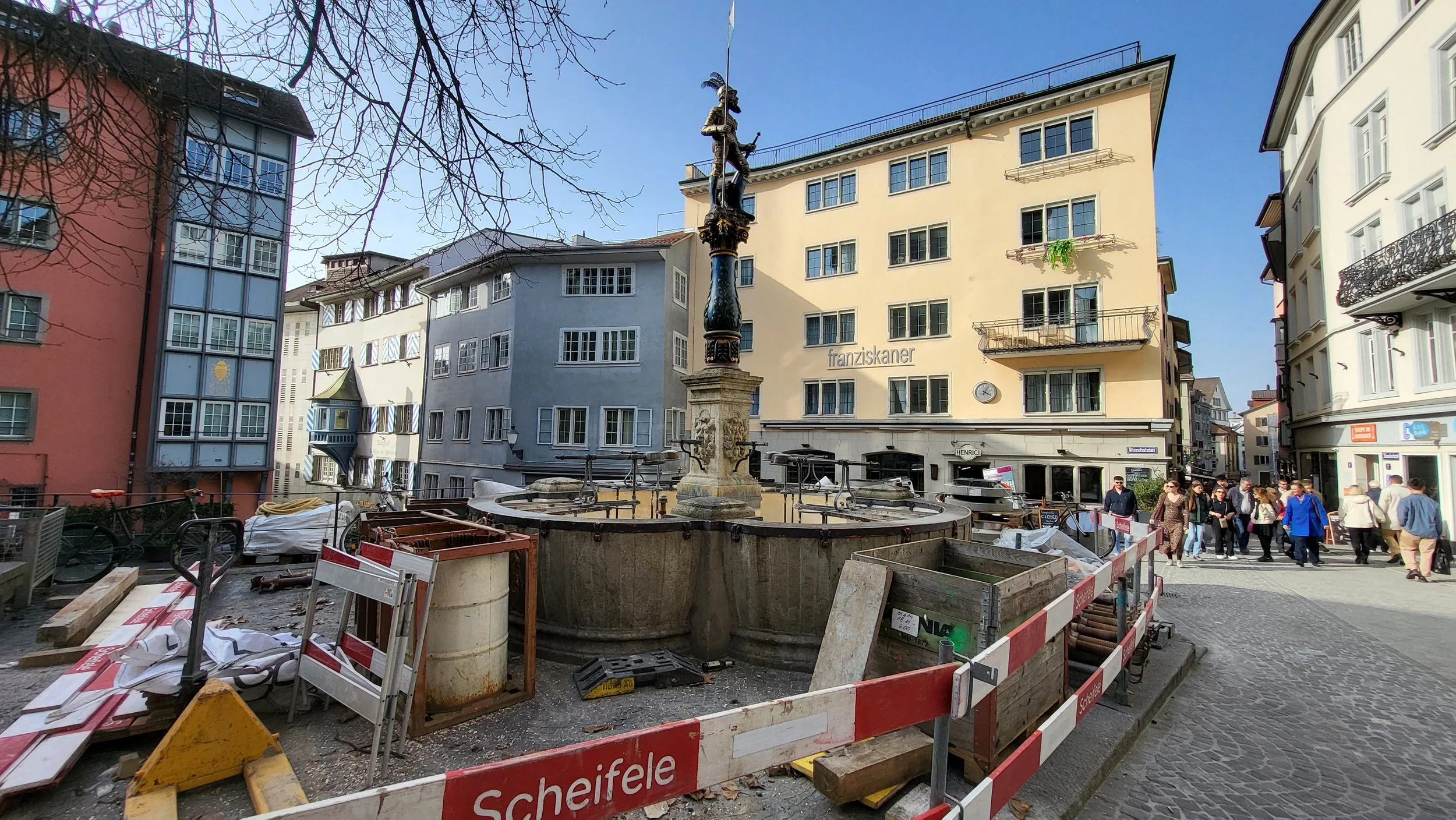
Stüssihofstatt in Zurich’s Old Town, where the Stüssihof sex cinema used to be.
Zurich's Old Town, especially the Niederdorf, has always fascinated me, ever since the 1960s when it was still a disreputable area. Back then, it was Zurich's red-light district, with prostitution, nightclubs, striptease establishments, smoky bars, and sex cinemas; the buildings were run-down, dingy and shabby. Perhaps it was the scent of the forbidden that drew me in when I first walked through the Niederdorf in the late 1960s.
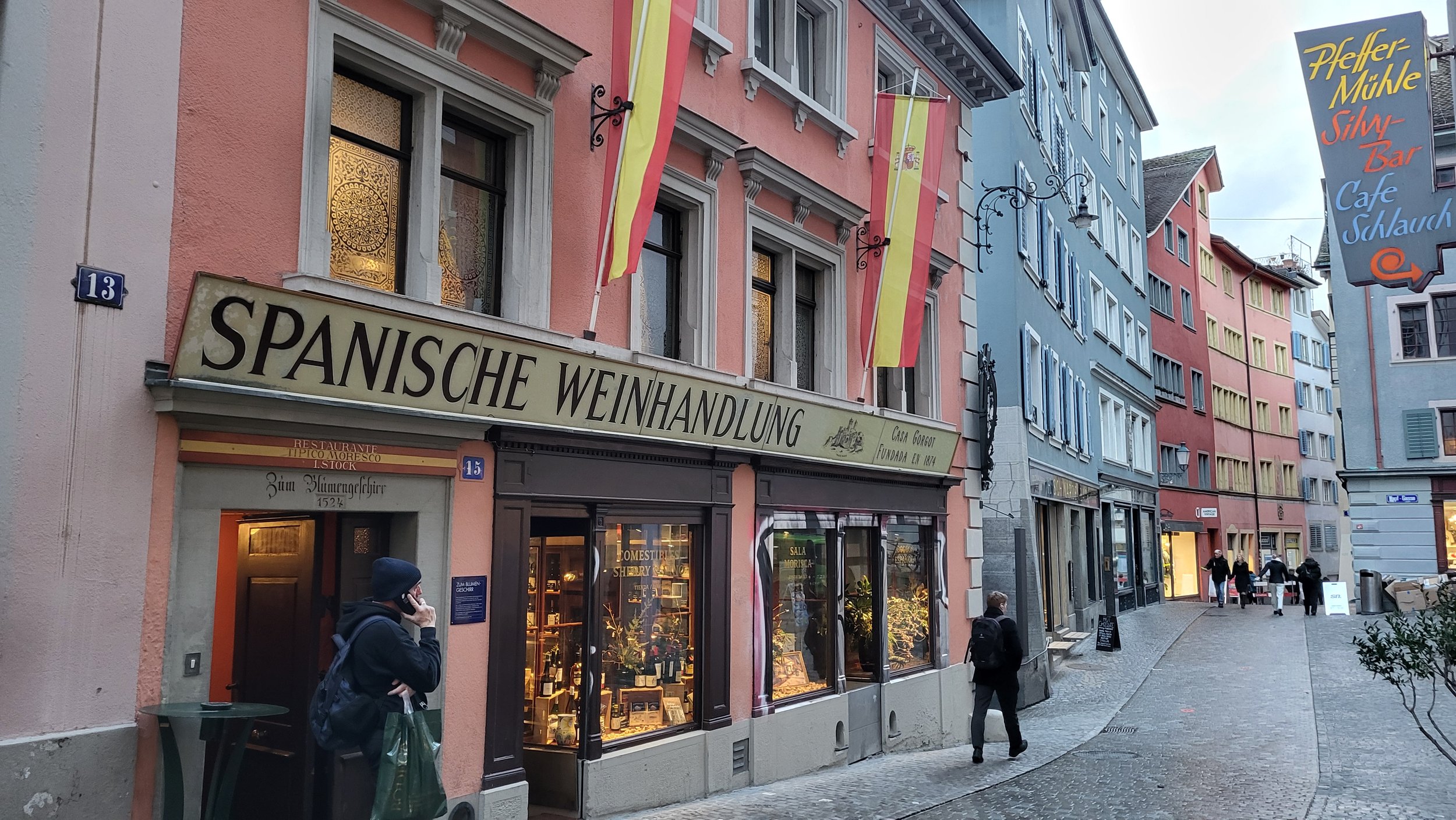
The popular Bodega Española, founded in 1874, on Münstergasse in Zurich’s Old Town. Here the renovation of the alley is already completed.
Later in the 1970s, the Niederdorf became a hotspot for rebellious young people, artists, and bohemians who were fed up with the dreary, stifling, and materialistic worldview of the elder generation. They gathered at legendary venues like the Bodega, the Malatesta, the Kon-Tiki, and the Antares, to name just a few. Most of these places no longer exist today. My favorite was the Bodega Espanõla. I remember the lively discussions about everything under the sun. We usually ordered the popular platter of “calamares fritos”—fried squid rings, and we drank Spanish Rioja or Muscat. Almost everybody smoked, health wasn’t a concern. There was something exciting about the Niederdorf; adventure and freedom were in the air.
Froschaugasse - charming and steeped in history
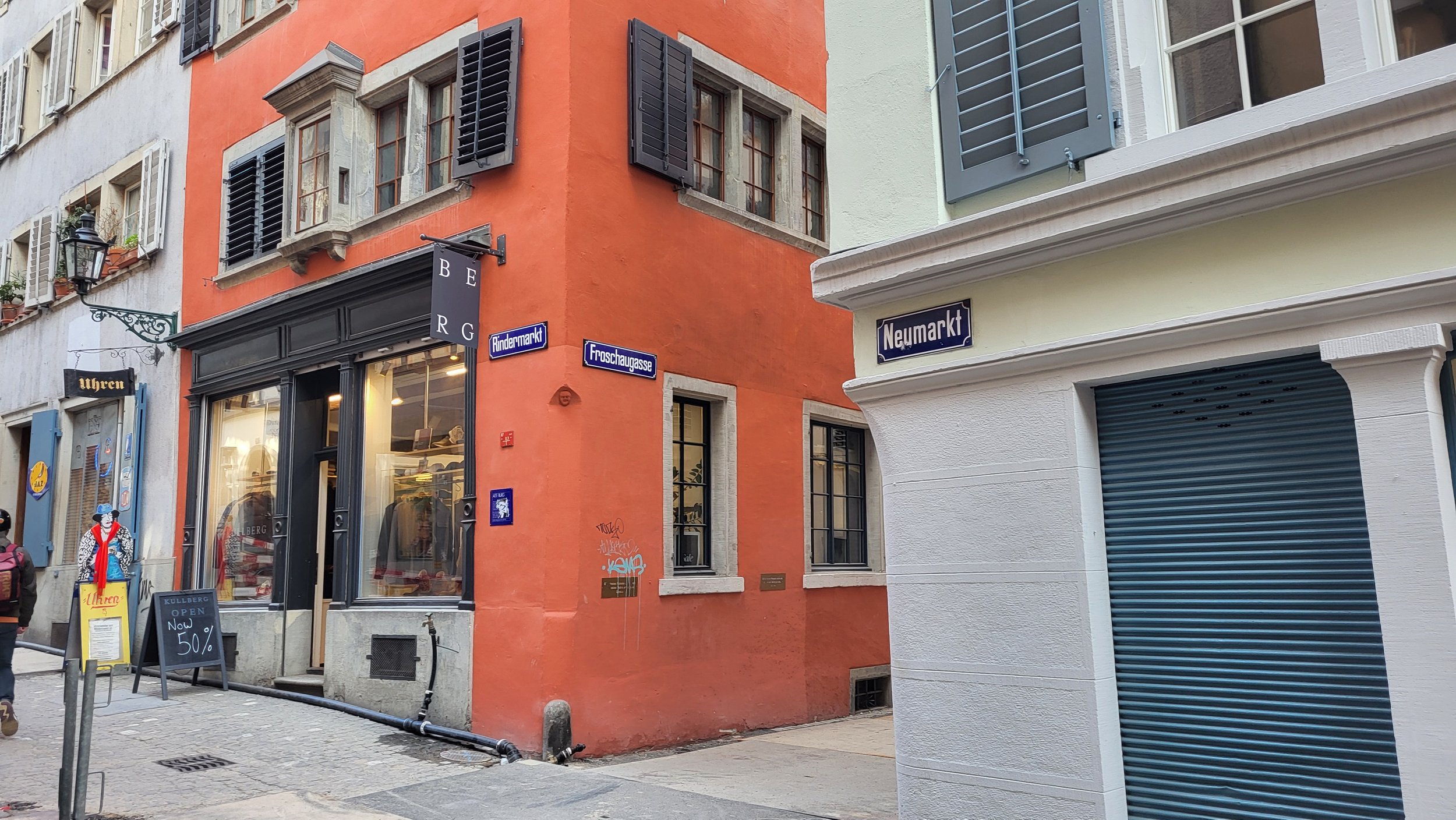
Entrance to Froschaugasse in Zurich’s Old Town, Switzerland
Back to the present. Despite the extensive renovations underway, I can still follow my usual route from Neumarkt through Froschaugasse, which is home to many charming shops and artisanal businesses. One of them is the wonderful “Musikhaus Thurnheer,” which specializes in wind instruments; I’ll write about that in another blog post. Hopefully, the renovation work on Froschaugasse will be finished by then.
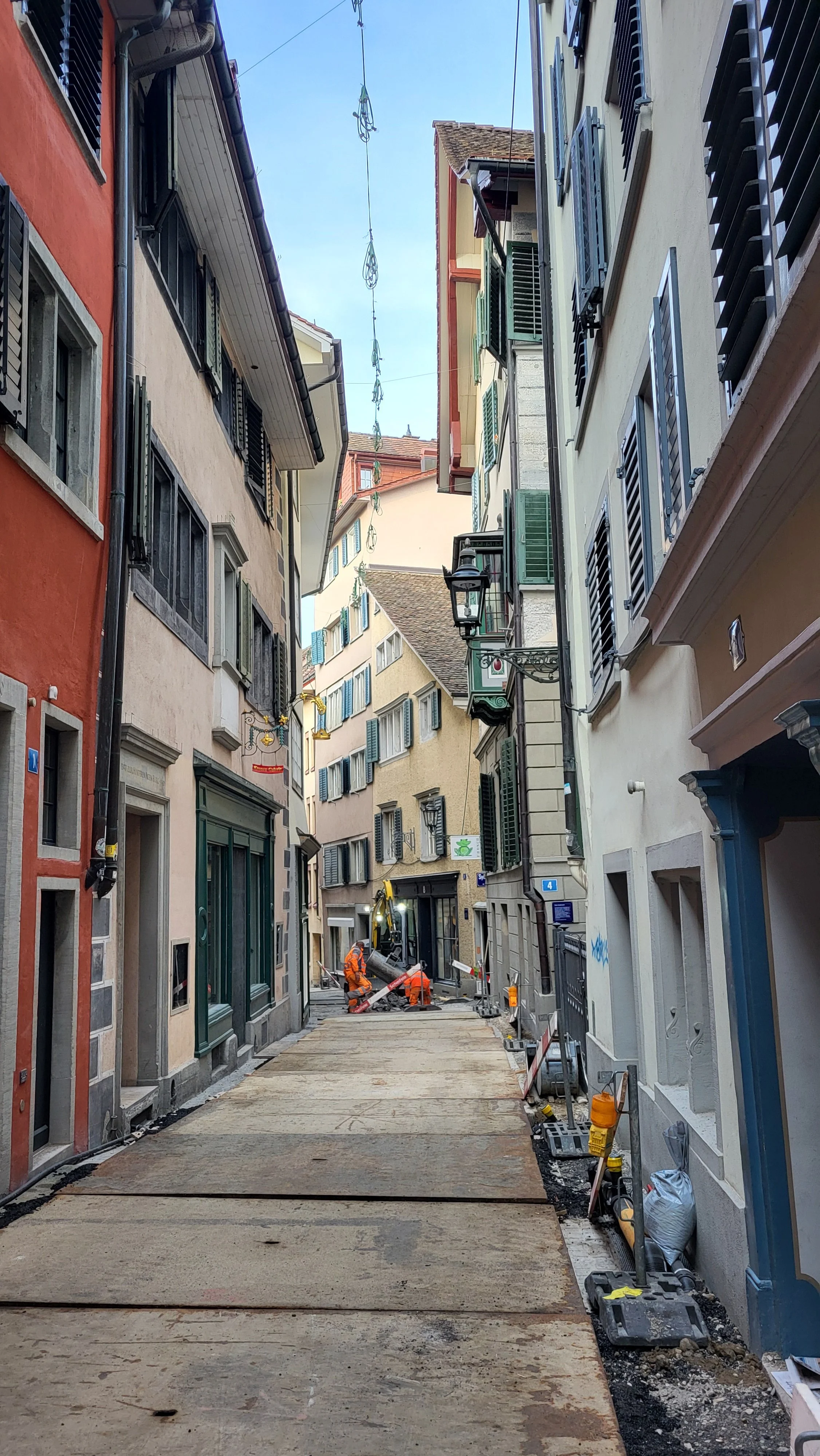
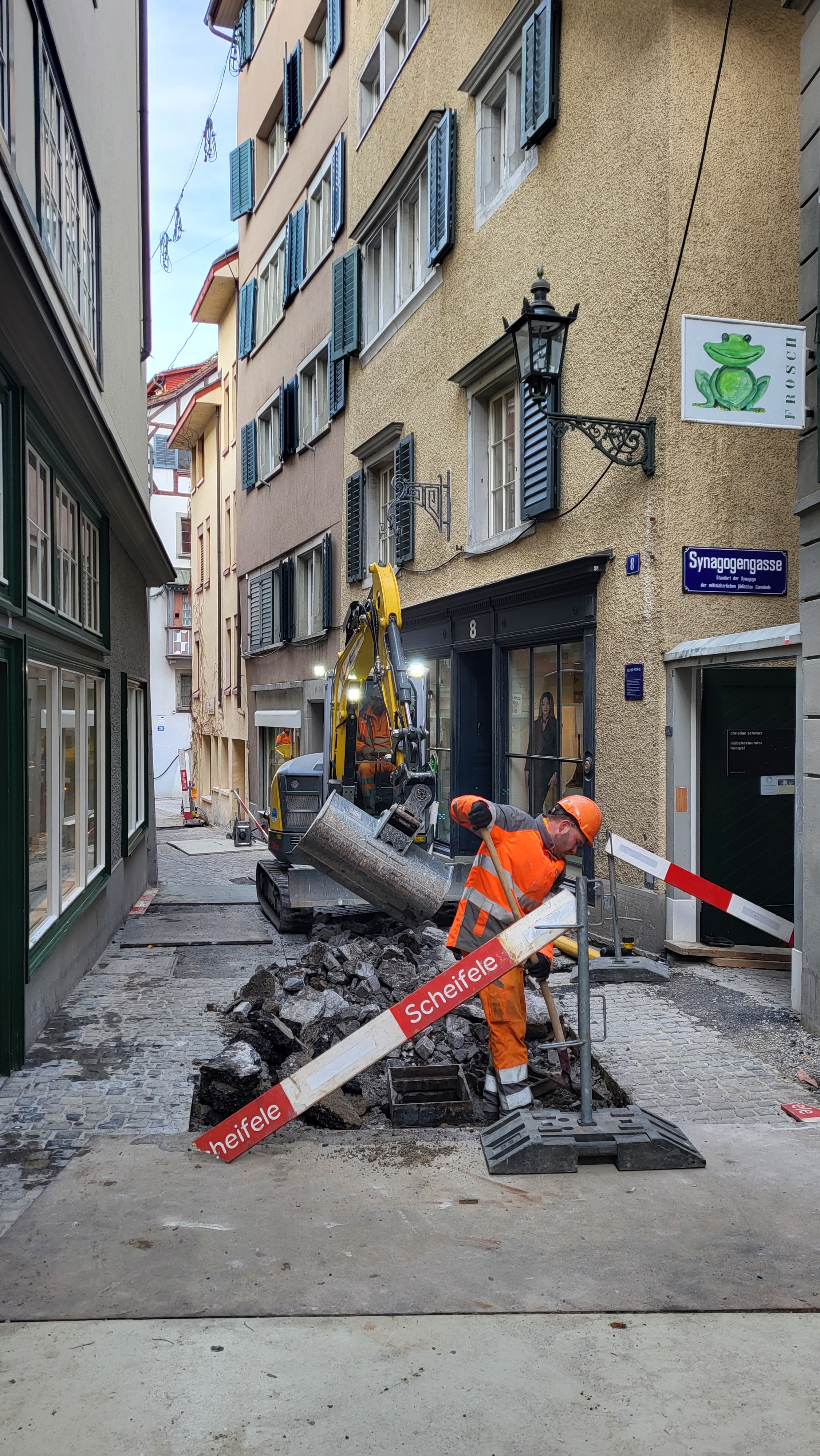
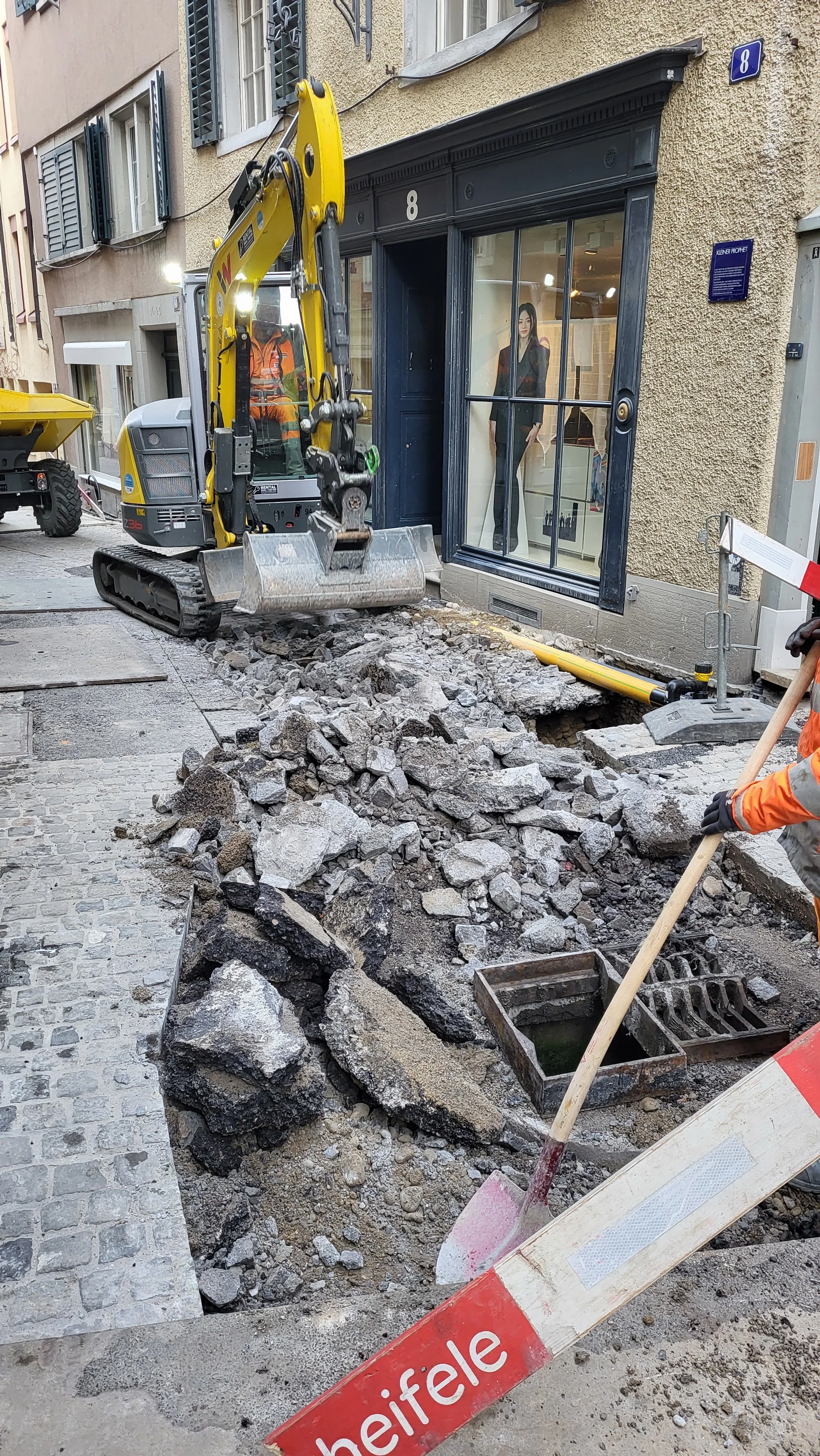
A brief look at history: Froschaugasse is named after Christoph Froschauer, a pioneer of printing and publishing in 16th-century Zurich. He was an important supporter of the Zurich Reformation, a religious movement that opposed Roman Catholic traditions and was led by Huldrych Zwingli (1448-1531), pastor at the Grossmünster (see photo at the top). There is much more to say about the Zurich Reformation, which radically transformed the city’s cultural and political landscape and spread to many parts of Switzerland, but that would go beyond the scope of this blog. Just one more interesting historical detail about Froschaugasse: In the Middle Ages, it was known as Judengasse (Jewish alley), and a synagogue was located there.
Predigerplatz and Zähringerplatz - lots of good vibes
Another highlight of my walk is Predigerplatz and Zähringerplatz, two adjacent squares with a great atmosphere. Good vibes emanate from the many students who gather joyfully in front of the Zentralbibliothek Zürich - one of the largest academic libraries in Switzerland - or sit on the steps of the Predigerkirche (Preacher’s Church) right next door, a very active “open city church”.
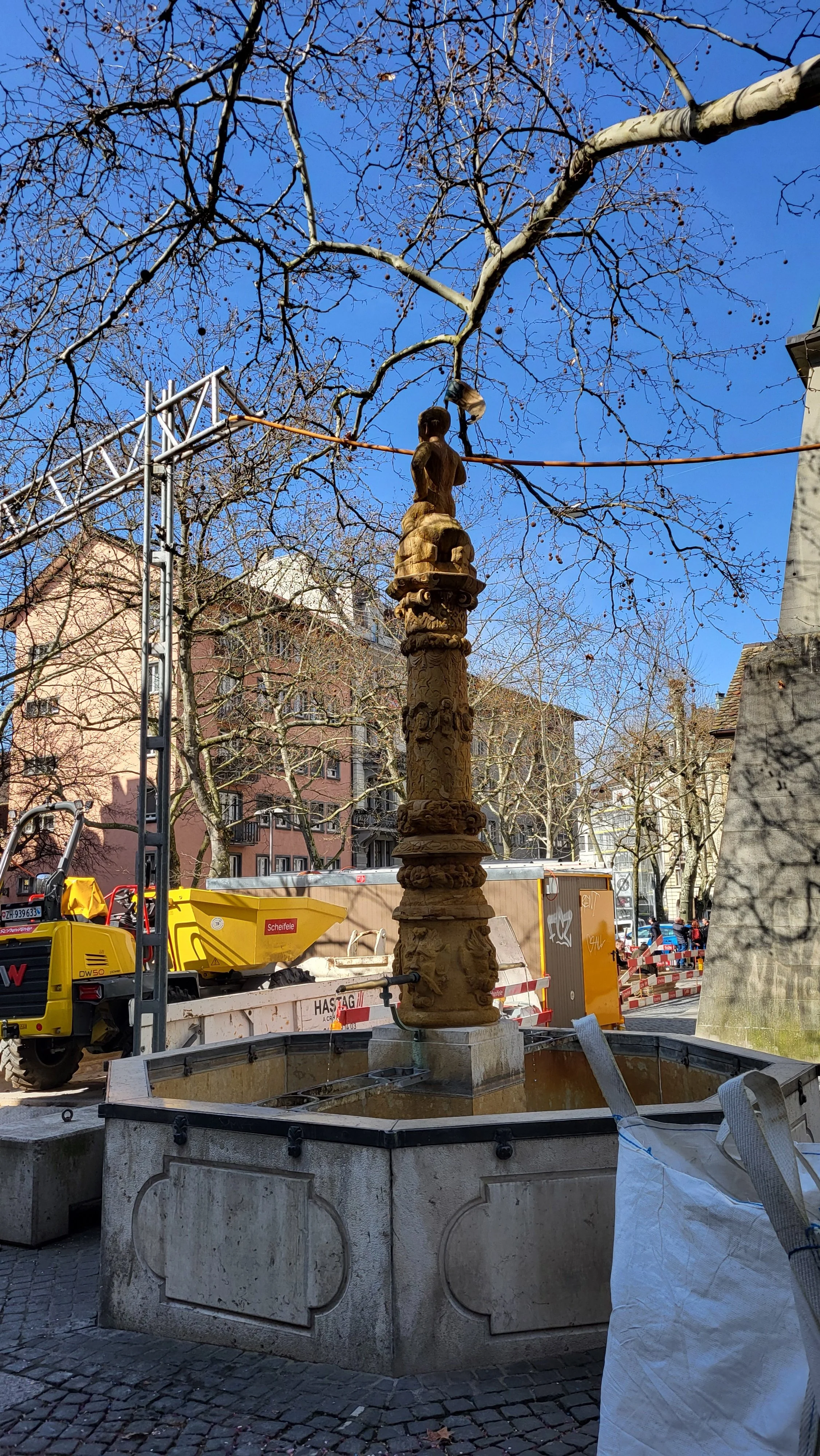
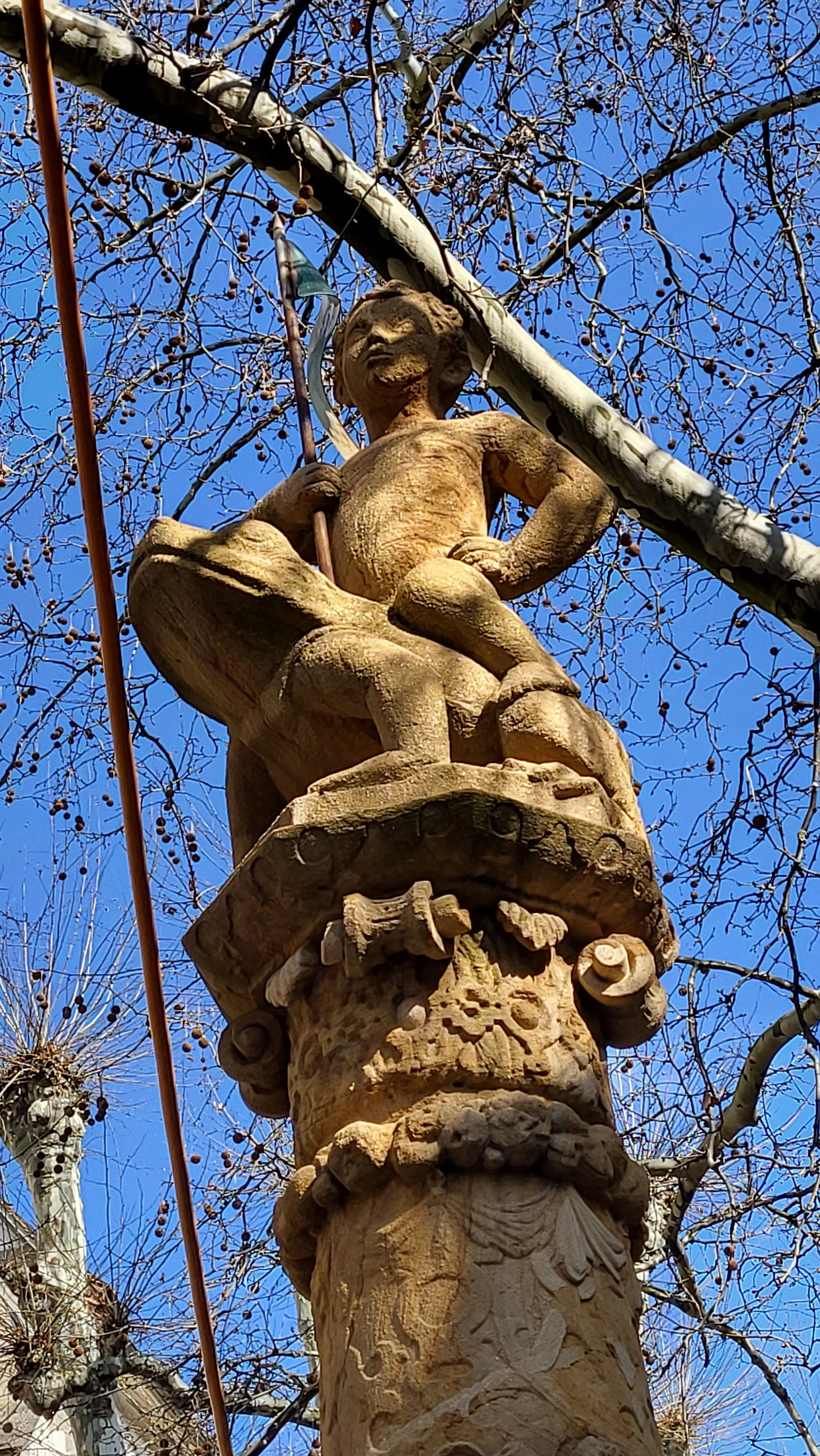
The beautiful old fountain on the corner of Predigerplatz is called Froschauerbrunnen. Like the alley I just walked past, it’s named after the printer and publisher Christoph Froschauer (ca.1490 – 1564). The sculpture on the column - a boy riding a giant frog and holding a flag - is the printer’s trademark. (Frosch means “frog” in German). Usually, I like to linger here and watch the water flow (unfortunately there’s no water flowing right now because of the ongoing renovation work).
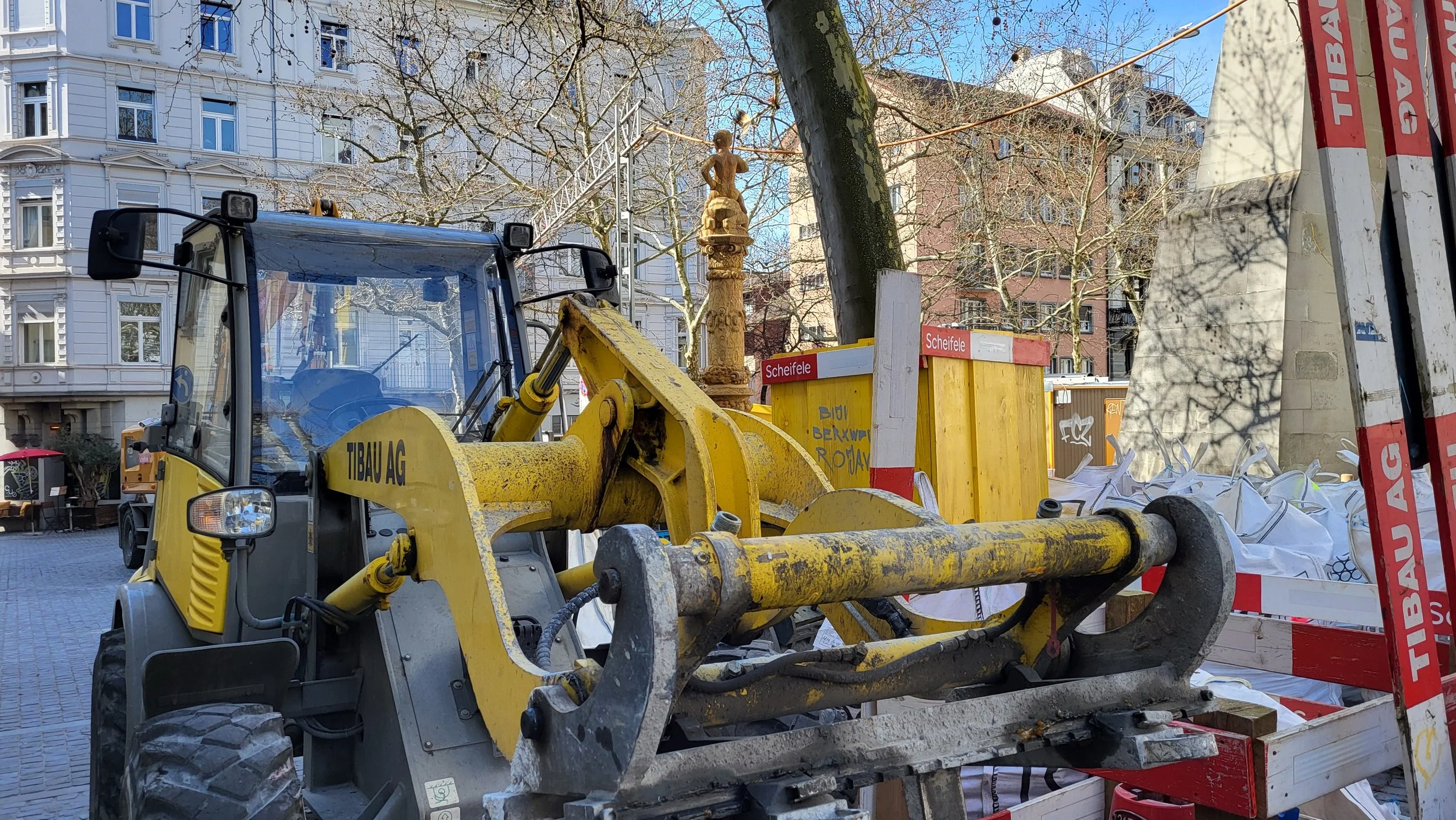
The renovation work - here at Predigerplatz - poses quite a challenge for the restaurants and shops in Zurich’s Old Town.
Pestalozzi Bibliothek Zürich - a paradise for bookworms
My final destination is the PBZ Pestalozzi-Bibliothek Zürich, located on Zähringerstrasse in the Old Town. It’s my favorite library, which I visit very often because I’m an avid reader—a bookworm.
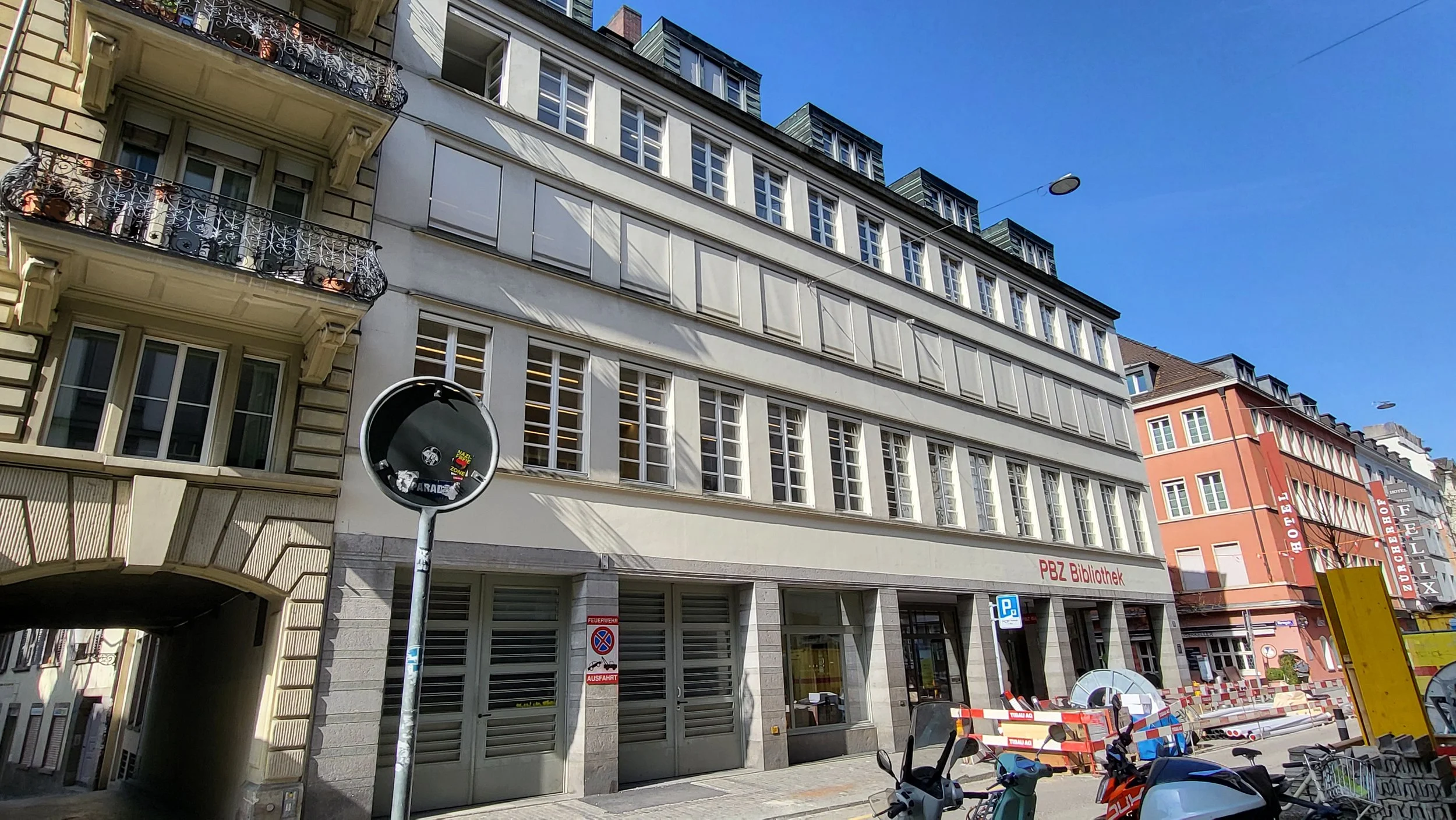
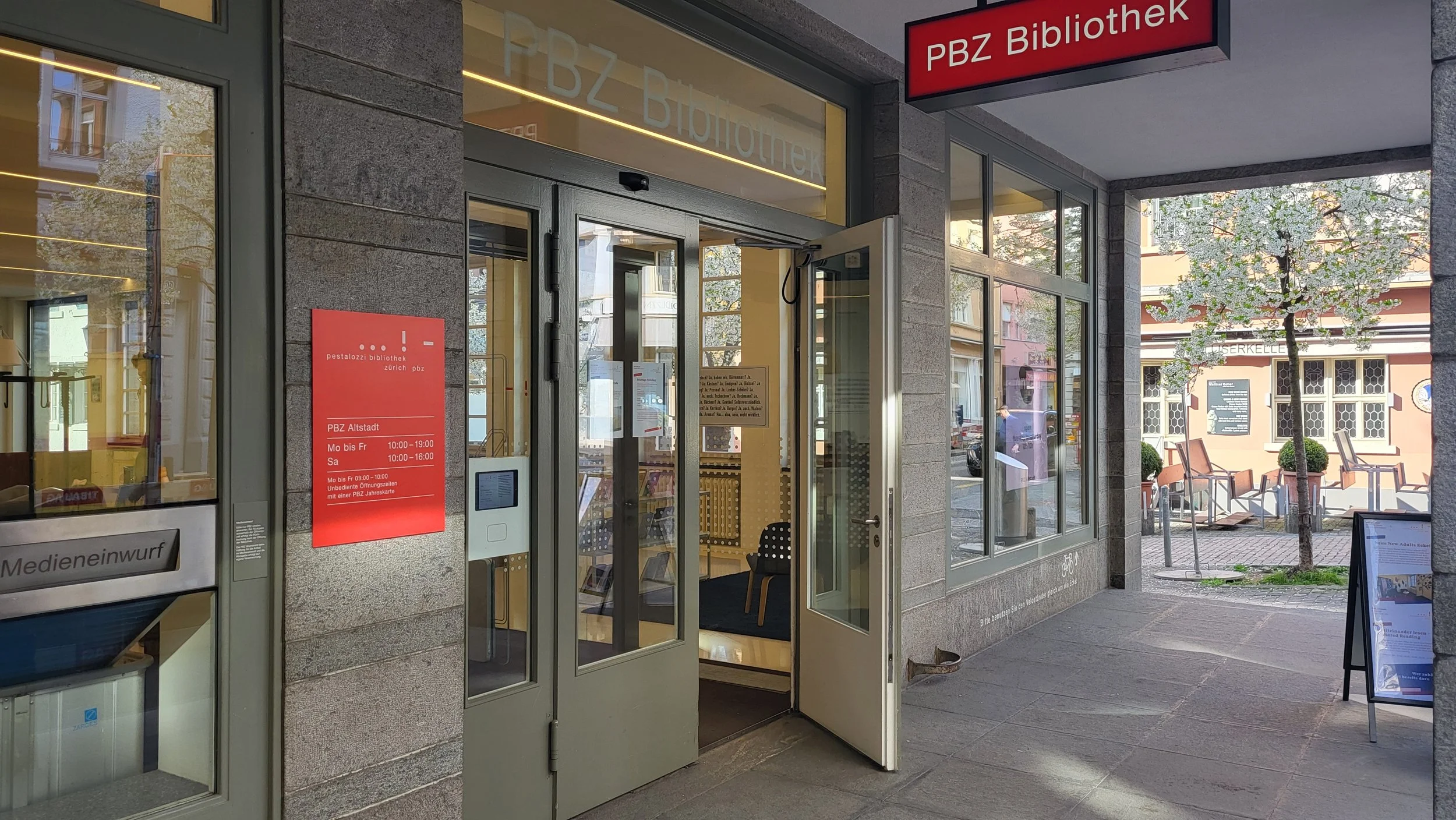
It's a public library founded in 1896 and named after Johann Heinrich Pestalozzi (1746–1827), the great Swiss pedagogue, a pioneer of modern education. His approach was holistic “learning with the head, heart, and hands”. He believed in education for all children, regardless of their social background. The library still embodies this spirit; everyone is welcome there.
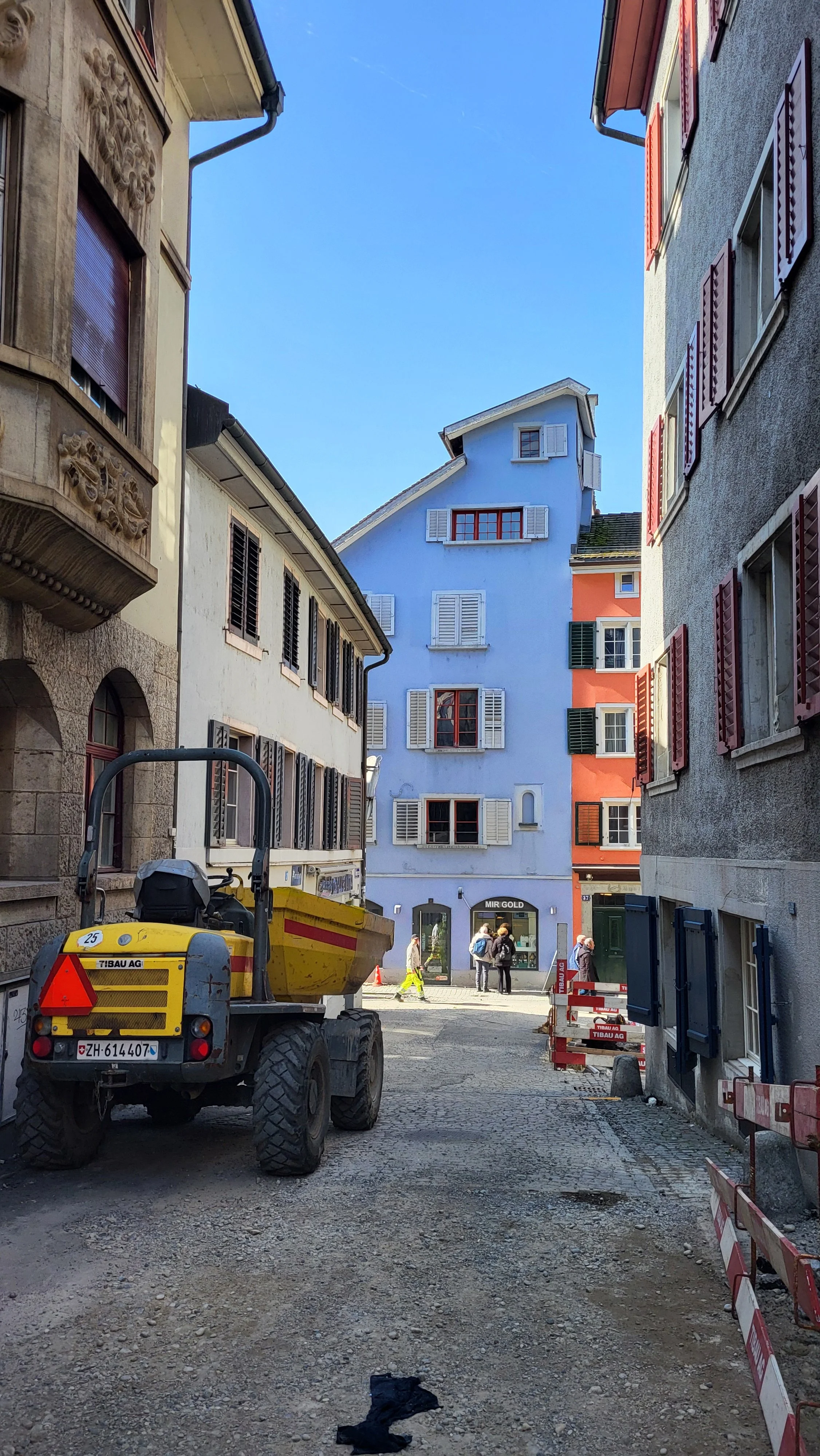
After my visit to the Pestalozzi Library, I usually turn right and walk down a small alley to Niederdorfstraße. Although I have walked this route countless times, I only recently noticed this colorful group of houses. I am particularly intrigued by the tall blue house.
My accident at the Hirschenplatz
As I promised at the beginning of my blog, I am going to tell you about the “bad experience” I had while strolling through Zurich’s Old Town with my eyes turned skyward. To do that, I need to take you to the heart of Niederdorf, to the famous Hirschenplatz.
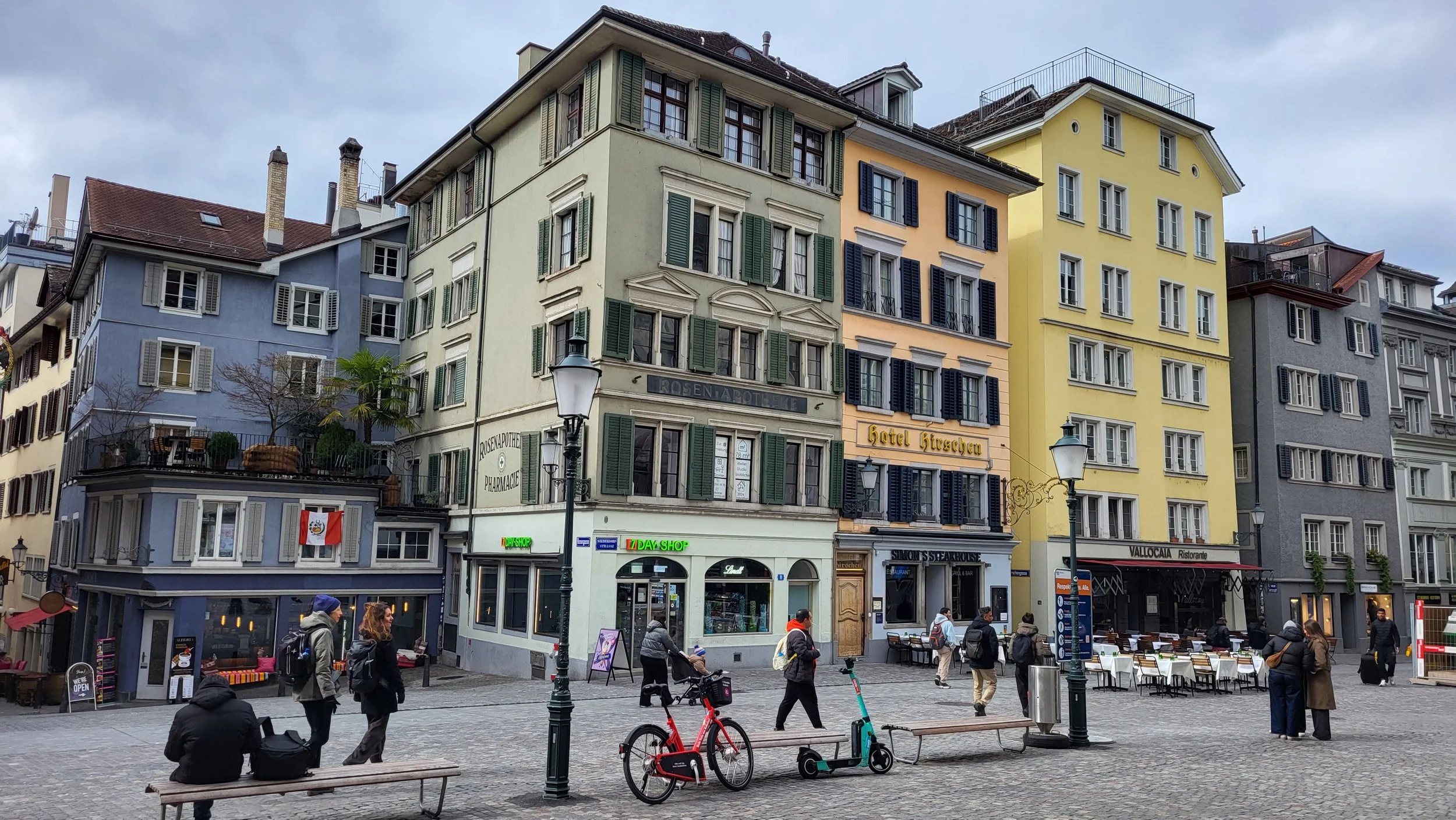
Hirschenplatz in the heart of the Niederdorf, Zurich, Switzerland
It happened last August: As I was crossing the newly renovated square, lost in thought, I stumbled, slipped, and fell hard to the ground. I ended up in the emergency room. My left ankle was swollen almost to the size of a tennis ball. Fortunately, nothing was broken. However, I had to wear an ankle-foot brace for six weeks. Only then was I gradually able to stroll through Zurich's Old Town again.
I wasn't the only one who fell on the newly renovated pavement. So, I contacted the city; they explained that the old cobblestones had been specially smoothed and fitted with small curbs on both sides to make the alley accessible for people with disabilities.
My advice: stay alert and happy!
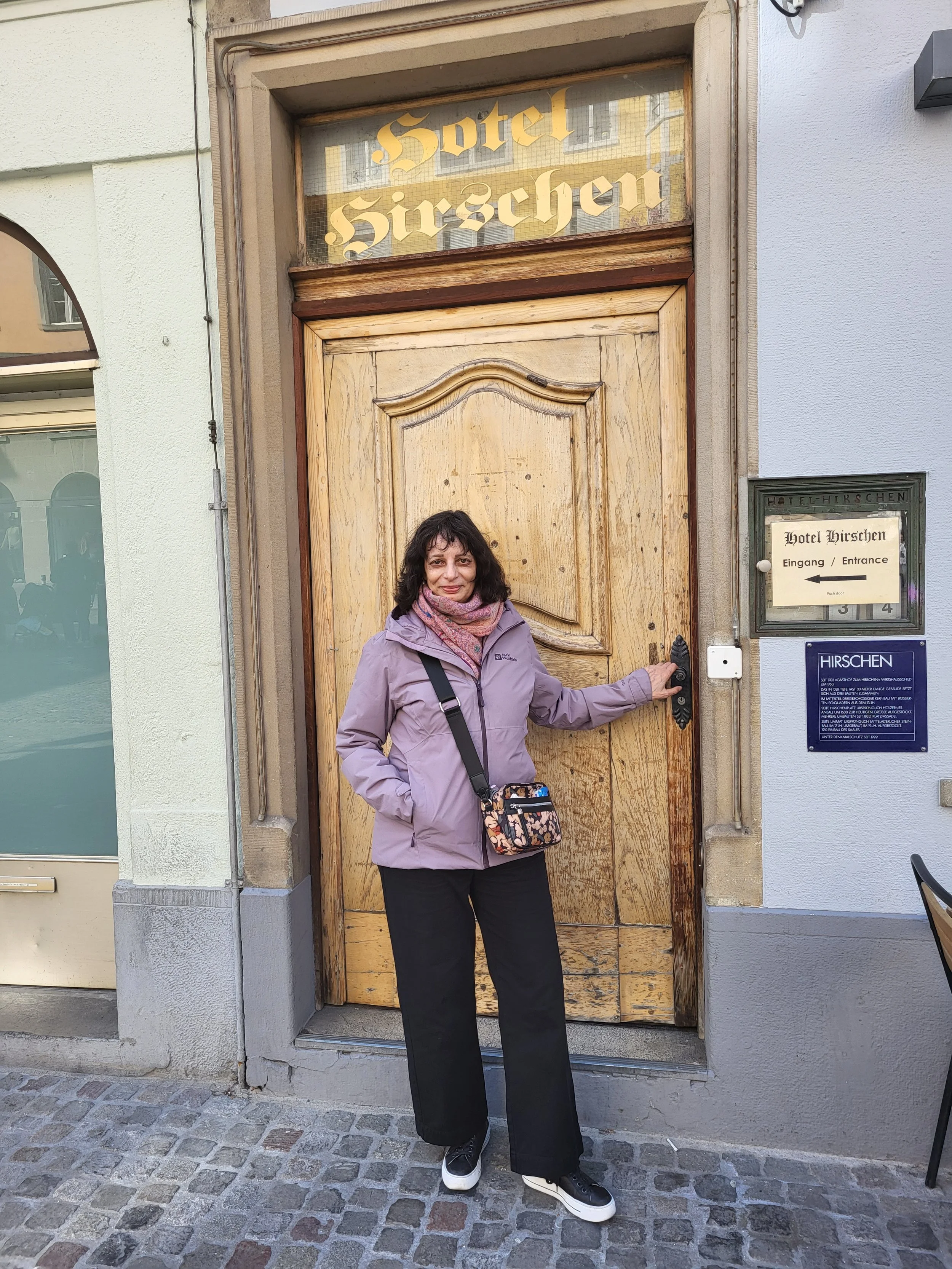
I am standing in front of the legendary Hotel Hirschen in Zurich’s Old Town. From the 1960s onwards, live concerts by major rock bands such as Pink Floyd, Black Sabbath and others took place here.
All photos © Chitra-Lekha Sarkar 2026
This blog post was inspired by a book I discovered in the Pestalozzi Bibliothek Zürich: “Flâneuse: Women Walk the City in Paris, New York, Tokyo, Venice, and London” by American author Lauren Elkin. “Flâneuse” is the feminine form of “flaneur”.
Another Niederdorf story that I published on YouTube. It’s about my favorite Indian restaurant “New Bombay” at Predigerplatz in Zurich’s Old Town. https://www.youtube.com/watch?v=hiUc1qmAsJE&pp=0gcJCdkKAYcqIYzv